Thursday, September 3, 2015

GET THE HOTS FOR DARK PLOTS - BARKER, KING, & THE NEW BLOOD


     In this latest Eek! Speak blog, instead of a movie discussion, I want to talk books, in particular three new titles that each had an impact on me. Two of these books happen to be from my two favorite horror authors, although I should drop the genre label, because they are my two favorite authors, period. The third book is from a new author who you haven’t heard about yet, but will soon, in just a few minutes.

     I’ll hesitate from saying these are book reviews, because they are not reviews in the traditional sense. I am not going to find any gripes or provide criticisms with these books, because I don’t have any. As with my film writing, I am not interested in criticism, but celebration.

     So let’s celebrate these three bloody books, shall we? As Stephen King states so perfectly in Under the Dome, I "get the hots for dark plots"!
    
     Clive Barker’s latest novel, The Scarlet Gospels, was released in late May, and it’s a title the author has teased us with for two decades. At one point, the book was said to be 243,000 words, but the book that has seen release is closer to half of that. That shorter page count concerned me at first, until I delved into the pages. Elaborate world building has been Barker’s passion of late with the Abarat series, and it serves him well here in constructing the darkest universe of all, Hell.
This looks like a forbidden book.

     Hell in The Scarlet Gospels is distinctly Barker's, subverting the Hell that we saw in Hellbound: Hellraiser II. This Hell is not the Hell of Christian lore. There is no fire and brimstone, only cold stone and diseased terrain. Hell is familiar in many of its workday hassles and hierarchies, and in its crumbling architecture and infrastructure. Hell has become ancient Rome in its final days, a decadent circus society that can no longer sustain itself.
Inner cover jacket illustration of Hell by Clive Barker.

     At the center of Hell and The Scarlet Gospels is the demon we know as Pinhead, but since he loathes that nickname, I’ll refer to him by his favored moniker, the Hell Priest. This book is all about his downfall, and whether he will bring Hell down with him. Lucifer may or may not have anything to say about the wayward demon laying waste to his kingdom, and one of Barker’s most delicious conceits here is that for the denizens of purgatory, Lucifer’s presence and power must be taken on faith.

     The Hell Priest’s first appearance was in Barker’s 1986 novella The Hell-Bound Heart, where he was relegated to background status and went unnamed. Pinhead became a character in Barker’s directorial debut Hellraiser, played with iconic grace by Doug Bradley, but the character strayed in a long running series of Barker-less sequels. With The Scarlet Gospels, it’s exciting to see the Hell Priest back in the hands of his creator, getting the full story he deserves. This is no longer the graceful ghoul people know from that first movie, or a hero monster that would belong with the Nightbreed. The Hell Priest earns his name with an unending stream of atrocities against humans and inhumans alike. He enters the story with a massacre of a hidden sect of psychics, employing such creative tortures as hook and chain bowel removal and accelerated malignant pregnancy. He’s also a bully of brute strength, and enjoys violence as base as beating and raping a crippled old woman. Yes, this Hell Priest is a total fucking bastard, as he should be.
From demon to Pinhead to the Hell Priest.

     The Hell Priest does not go rogue alone. He creates a slave Cenobite to assist in his rebellion, named Felixson. The inventive mutilation that this character displays I found quite disturbing, so much so that it hurt my mind's eye. I would love to see a Barker drawing of him. Felixson is a memorable new creeper.

     We don’t have to take this journey with depraved monsters alone. Unluckily drawn into the Hell Priest’s orbit and domain is perennial Barker hero, paranormal investigator Harry D’Amour, last seen in Everville, which is my favorite Barker book. At Harry’s side is a motley crew of outcasts whose lives have been plagued by continual connections to the supernatural. Together, this close-knit group of friends on the fringe bring some much welcomed levity to what otherwise may have been a too dreary trip through Hell. These are not screaming victims by any means, prone to shrieking on sight of a monster, of which there are thousands. Even with the armies of Hell on their heels, they can still joke, come up with creative curses, and make passes at each other. Hell cannot quell human hormones.
Hell cannot be contained within The Scarlet Gospel's pages.

     With The Scarlet Gospels, the man who initially gave us Books of Blood has delivered an epic of evisceration. Not only is the novel awash in the title color, it is a carnival of gleeful perversities, with a nonstop barrage of ejaculating evils, diabolical genitals, and unholy fornications. When a grinning face pushed out of a demon's butthole, my own grin grew so wide I feared the edges of my mouth would meet at the back of my head and my cranium would fall off. I was looking forward to a second read before my first reading was over. There are so many lines worth revisiting, like “I don’t know you from a warm hole in a cold corpse.”

     Two scenes in particular really struck me that I want to mention. The first involves one of the first stages of the Hell Priest’s takeover, or takedown, of Hell, as he unleashes a flock of origami birds with murder spells written on them on an assassination campaign against Hell’s order. This vivid scene is a clever extension of the written word as weapon theme from Mister B. Gone.
Mister B. Gone echoes within The Scarlet Gospels.

     Another scene that had resonance occurs toward the end of the book, when the survivors, devastated by loss, return back into our world, stranded on a deserted southern highway. Of all possible rides, a black sedan with a cross hood ornament stops for them, carrying the corpulent Reverend Kutchaver. This spokesman for God, with his rote preaching and empty platitudes, proves so annoying that the Harrowers are reassured their tragic journey through Hell and back was the right path. Better to battle demons and sometimes lose than submit to the ignorant bliss of false salvation like this fool Kutchaver.

     I have many friends who ordered the UK hardcover edition of The Scarlet Gospels for the striking scarlet David Mack illustration of Pinhead on the cover. I prefer the more mysterious cover of the US edition, with an arcane symbol in the center and the letters seared into the weathered jacket. It gives more the appearance of a forbidden religious text of some secret sect. Barker’s illustration of the Hell Priest on the back cover is another bonus.
Back cover for the US edition of The Scarlet Gospels.

     My history reading Barker extends back to early 1986, when I read his first Fangoria interview in issue #51. I was intrigued by the high praise Fangoria gave him, and I rushed out to buy Books of Blood Volume One, and then Volume Two and Volume Three in rapid succession. Who else remembers the ridiculous covers of those Berkley Horror paperback editions, with their pictures of silly rubber monster masks in lurid colors? Those covers may have alluded to cheap pulp, but those of us who dared to read them knew those books were the most subversive and outlandish horror gems to ever grace supermarket shelves. I have been a Barker enthusiast ever since, eagerly following every new book with a release day hardcover purchase, and I have enjoyed his flights into fantasy as much as his horror offerings. The third Abarat book, Absolute Midnight, is my second favorite Barker book.
My first three Barker books today.

     Fangoria wasn’t the only voice to give Barker’s debut a solid endorsement. There was that famous quote “I have seen the future of horror… and it is named Clive Barker” that graced those Books of Blood covers, from my other favorite author, Stephen King. In January 1985, one year before I read Books of Blood Volume One, I picked up my first Stephen King paperback, Cujo, immediately followed by Firestarter, and then Carrie, and then Night Shift, and then Christine, and then just about everything up to this day. With that quote, I wonder whether Clive enjoyed King calling him an it instead of a he.
He introduces us to it.

     It was a momentous occasion for me to recently have both of these authors deliver new books of bloody horror, released two weeks apart, thirty years after I became an addict of their work. I feel privileged that they have persevered, considering both have battled near death experiences in recent years, and that they continue to craft exactly the kind of pulse-pounding stories of graphic terror that I have craved since my first days reading them. The horror genre has evolved heavily since these guys entered the scene, in great part because of their efforts, but the writing itself is not exactly the same. Barker and King 2015 do not write as Barker and King 1985 did, nor should they. After three additional decades of honing their craft, I believe the work of both men has gotten better, and is as imaginative (Mister B. Gone’s “Burn this book” conceit) and vital (Under the Dome’s democracy burning under a magnifying glass) as it has ever been. I even prefer Doctor Sleep to The Shining.
My first five King books today.

     My desire to reread The Scarlet Gospels would have to wait, because Stephen King’s Finders Keepers came out right on Gospel’s cloven hooves. While the only scarlet on the cover of Barker’s book is in the title word, the cover of King’s novel is awash in a rain of blood, saturating the pages of an open book. This cover certainly lets us know right off what we will find within the book’s pages, namely bloody murder. While Finders Keepers is in no way near the gorefest of The Scarlet Gospels, the sporadic scenes of violence are flinchingly brutal. With both The Scarlet Gospels and Finders Keepers, the body counts are not exceedingly high, specifically the human body count in the case of Gospels (for Hell, it’s a slaughter). Both authors make us care for the leads so much that when something terrible finally does happen to them, it’s devastating, which is key to the most effective horror writing.
This looks like a messy read.

     Since Finders Keepers is the second book of a trilogy, I recommend reading the first volume, Mr. Mercedes, first. Mr. Mercedes also features a blood rain cover, with a drenched umbrella, but that book was more of a crime suspense thriller, involving a retired policeman being taunted by a spree killer from his past. Finders Keepers keeps the detective plot going, but with a more vicious killer on the loose, this book has a foot firmly planted in horror territory. Because many of the characters are returnees from Mr. Mercedes, most of the character building was achieved with the first novel, allowing for more action in Finders Keepers’ relentlessly propulsive plot. The heroes of Mr. Mercedes don’t appear until the second third of the book, but because of the strength of the new murder plot set in motion, I didn’t even notice their late arrival to this killer party.
Bloody and bloodier.

     Finders Keepers is one of my favorite types of Stephen King stories, the writer in peril tale (Misery and The Dark Half), which is sometimes the writer as peril tale (The Shining and Secret Window, Secret Garden). Either way, what these stories share is King’s insight into the creative writing process, which as a writer, I find endlessly fascinating. It adds to my investment, and sometimes more terror. One of the most disturbing King scenes for me is in Misery, which may be the closest cousin to Finders Keepers, and its not a scene of bodily harm; it’s the forced burning of Paul Sheldon’s new novel. Horrors!
Writer in peril!

     Finders Keepers begins with Misery’s worst-case scenario; a famous author is murdered by his number one fan. This literary lunatic absconds with a number of the author’s unpublished manuscripts, and what happens with these found, lost, and found again volumes and this psycho’s cyclone of violence that follows them is the playing ground for another masterwork of unbearable suspense from the King. I was stunned by the breakneck pace and suspense of this book. Thank you, Stephen King, for continually trying to cook up the perfect scare. I will gladly keep eating them up.

     The killer in Finders Keepers, Morris Bellamy, is a more terrifying creation than Mr. Mercedes’ loser spree killer Brady Hartsfield. Morris’ violence is committed on impulse, and his targets are anyone, man, woman, or child, that gets in the way of his prized literature. This madman is all too familiar. Aren’t all of the killers of the world who justify murder by quoting the Holy Bible or other religious text nothing more than Morris Bellamy, obsessive literature fans who prove their passion by drawing blood?

     Finders Keepers is the second book of a trilogy that seems to be changing subgenres as it moves along. Mr. Mercedes is a reality based crime tome, and so is Finders Keepers, except for two minor moments where some Carrie style shenanigans come into play. These moments are brief, but they imply a supernatural direction is coming with the third volume, End of Watch. That shift may lose a few readers who prefer King’s realism to his magical works, like my partner, who would pick The Body to The Dark Tower any day. I, however, cannot wait to see the surviving characters of this series suddenly have to face a Shining style assault, with tampons and redrum flying all over the place. 
A clue where the trilogy is headed?

     The third book I want to talk about is quite different from the other two, a non-genre work from a first time author, The Day Harken Darringer Died by DoctorBuckles. This semi-autobiographical tale concerns the life of a young musical genius named Harken, and follows him during his horrible home life until his emancipation after high school. Setting out for the big city of Los Angeles in the early 1980s, Harken gets swept up in the West Hollywood party boy scene and hustling, and inevitably has to face the AIDS epidemic that explodes during that decade. Harken falls a victim to his excesses, leading to the event of the title, only is death really the end for Harken? Can an autobiography be written about one’s own death?
The dark side of hustling, from The Day Harken Darringer Died.

     I went into The Day Harken Darringer Died expecting a gay memoir, but it’s really much more. I grew up a child of the 80s, and while I would not become a gay man until the 1990s, I was studiously aware of the AIDS epidemic that laid waste to the gay community in its first decade. I was simply not exposed to the devastation firsthand like Harken and all those who were just a few years older than I was and who were sexually active at the time. I've kept myself educated about those early years of the epidemic, and thought I knew just how bad it was. Reading The Day Harken Darringer Died, I was frequently shocked at how grim and hopeless those early AIDS years were for so many, with not just the disease decimating the community, but also a rash of tragic murder suicides.

     AIDS is not Harken’s only obstacle to health and happiness. A number of bullies, abusive boyfriends, and violent johns cross paths with Harken, and he’s left for dead on a few occasions. It’s really quite sad that our community, already under attack from a plague and conservative forces, still has the tendency to attack itself. The biggest bad guy of this book, however, is a bad woman by the name of Carlotta, Harken’s mother. The relentless physical and psychological attacks of this bitter woman upon Harken had me so infuriated that I wanted to crawl within the story to wring this woman’s neck. Carlotta is the new ultimate bad mother, knocking out old Joan and her coat hanger from Mommie Dearest with a frying pan to the head.
Innocent Harken won't stay that way for long, author DoctorBuckles.

     Considering the excessively high body count, bloody scenes, human monsters, and the inevitable extended death of the title, is The Day Harken Darringer Died really that different in genre from The Scarlet Gospels and Finders Keepers? It didn’t seem so when I read these three books back to back to back. Whether historical gay fiction or genre tinged death trip, The Day Harken Darringer Died is a compelling, recommended read. Author DoctorBuckles' first person prose is succinct and shows the promise of an exciting new voice. I especially liked the sensory passages, where he disconnects from the whole and gives his individual parts their own pleasures and passages, where The Body becomes The Face, or The Chest, or The Fill-In-The-Body-Part-Here.

     Supporting this story are one or more images accompanying each chapter, most of them of the author’s life as described in the story, which certainly helps to sell the reality of it all. You get to see seedy gay Hollywood exactly as it was in the 1980s, and Harken in full party mode. It’s an exceptionally vivid time capsule.
Slow down, Harken!

     The Day Harken Darringer Died has not yet been published, but the entire novel is available to read for free on the author’s website, www.harkendarringer.com. Not only a host to this novel and some short stories, the website is a wealth of information on many subjects. You can check out his frequently updated DoctorBuckles Blog, which covers and supports the arts, issues in the gay community, the continued fight against HIV, and the submission process in getting The Day Harken Darringer Died to publishers, and how the publishers respond, if at all. These subjects are always broached with enthusiasm and humor. It’s a Survivor’s Story, not only for the author, but also for the community. Anybody who reads it is obviously a survivor, and others still need to be saved. DoctorBuckles Blog is a necessary call for action as it turns you onto cool art.

     When The Day Harken Darringer Died finally makes it to publication, it could be in a condensed version from the one currently available online. The author has been candid in his blog that because of his novel’s long length, the feedback he is getting from publishers is that for a first time author, the word count will have to be trimmed. In the event of this, some of the chapters have subchapters, and those subchapters, sometimes listed as poems or short stories, could be dropped when the book finally makes it to print. These extra chapters contain some of the most explicitly violent and sexual material in the book. Addiction is a major component of this story, and I believe the book benefits from the excesses of these additional chapters. I’m cheering for this book to make it to print, but I recommend checking it out now, while it can be experienced in its most complete, uncensored form.

     One more book I want to mention before closing is another first novel, namely my own. It’s a horror novel titled Hoarder, and this completed book is on the eve of its release. I’m extremely proud to unleash this horror story, and within the book’s approximately 78,000 words, I want to deliver terror by the tons as I trap the reader within the ultimate hoarder house of horrors. My thirty years reading the masters of horror has inspired me to cultivate my own voice and tell my scary stories not only on film, but also in the field of horror literature.
The cover of my first novel, Hoarder.

     I have just released my first novel Hoarder. I'm going the self-publishing route for my first effort, since I do not want to wait potential years to reach publishers as the story languishes unread on my shelf. Hoarder wants to scare you now. I also appreciate the freedom to put this story out uncensored and completely on my own terms. More information and links to the paperback and ebook can be found here, www.hoardernovel.com.

     My novel writing is a continuing passion, with my second novel, Turkey Day also complete and nearing release, and a third book at the halfway point, my first Needful Things size epic. In other words, I’m in it for the life long haul. Books will not replace my films, but complement them. I hope that fans of Eek! and the authors above will give Hoarder a look. I promise to do my best to quicken your pulse.

Update: DoctorBuckles has now released The Day Harken Darringer Died as an ebook on Smashwords here, www.smashwords.com/books/view/593084 The book is no longer on his website, but a number of short stories can be found there along with his blog. Check them out.


Thursday, March 12, 2015

CHILD OF FRIDAY THE 13TH


My Years at Cinema Slaughter Camp


     Every Friday the 13th, I take to social media to share my love for this unusual theme day, and the film franchise that defines it. I’m certainly not alone in treating Friday the 13th like a holiday; many of my friends celebrate with posts, parties and movie marathons of their own. But where exactly did my love for this most unlucky day come from? Why does a retro murder movie hold such high esteem in my memories, and why does Friday the 13th continue to be one of my favorite days of the year, every year? This Friday the 13th, I thought it’d be fun to explore the reasons, like exploring an abandoned summer camp during a rainstorm at night. It’s a story of fear and tradition, a myth told around the campfire of my youth. It’s a twenty-four hour nightmare of terror that has lasted thirty-five years now, and is still going strong.

     It started with my adolescent screams on Friday, May 9, 1980, when Friday the 13th hit screens nationwide like the arrow to the bulls eye beside camp counselor Brenda. The wave of modern slasher horror had really begun two years before, when Halloween carved the box office and national consciousness like a pumpkin. I was too young to catch Halloween during its initial theatrical run. Like many kids who grew up in the 1980s, I first experienced Halloween during its second annual NBC broadcast, in truncated form, in 1982, with commercials for the newly released Halloween III: Season of the Witch aired throughout. In 1978, I was a moppet bopping down the aisles to Grease. There were no maniacs with knives in my worldview yet.


Too young.

     If Halloween is the granddaddy of the modern slasher movie, then Friday the 13th qualifies as the grandmommy, or more specifically, the grandmommy denied that was Mrs. Voorhees. Jason would not be giving her any grandchildren, even if he eventually gave her a graveyard.

     During my childhood, I was not a fan of horror movies. In fact, I genuinely hated them for scaring me. Shocking, right? I’m talking the black and white classics and luridly colorful Hammer films on television, before I became aware of modern horror along the lines of The Exorcist and The Texas Chainsaw Massacre. Even the intro to John Stanley’s late night Creature Features series was too scary for me, with its images of Christopher Lee as Dracula. During the 1970s, Scooby Doo and The Twilight Zone were the only scares I could tolerate. I even have memories of sitting in cringing terror during Young Frankenstein, which I caught on the big screen in my earliest years, probably because of Peter Boyle’s freaky forehead and Marty Feldman’s freakier eyeballs.
Too scary.

     On May 9, 1980, I was eight years old and too young to see a film of Friday the 13th’s intensity. It was entirely my decision to do so, and I still have to wonder what possessed me to do it, considering my incredibly low threshold for the scary stuff. I recall the schoolyard hype for this movie, and the chillingly effective commercials that dared you to see it once (“but that will be enough!”). Perhaps this was some kind of cinematic shock treatment, so I could end the long, sleepless nights that monster movies gave me. Only Friday the 13th didn’t have any monsters in it. It had a person with a knife. And that bloody knife was a lot bigger than Christopher Lee’s blood-tipped fangs.
 
Even this poster terrified me.
     There’s no question that I was not old enough to view Friday the 13th alone with the film’s restrictive R rating. Luckily, my teenage babysitter Kelly was game to go and get me into the film, even if she was not my legal guardian. My legal guardian did approve, since my mom drove us to the Tri-Cinemas for the first 5:30pm show on opening night. And what kind of mom would let her children see Friday the 13th? One that was also a horror fan. In the mid-80s, we would go together on opening night to see films like Silver Bullet and Day of the Dead. For this permissiveness to always let me choose what I wanted to see, her complete disregard for film ratings, and for frequently arguing with theater staff to let me in because I was mature enough to watch whatever it was they were showing, I say Thank you, mom!

Friday the 13th was not only the first horror film I saw in a theater, it was my first R-rated movie. This was the very first of thousands of times I would challenge and subvert the rules of the notoriously censorial MPAA. While most kids growing up rebelled against their parents or school, my chief rebellion was towards the ratings board.
I defy your rating!

     When we entered the theater for the 5:30pm showing, it was light outside. It would be dark when we left the theater two hours later. The terror of that night would last for years.

     Friday the 13th was in the big showcase auditorium #1 on the left, and we sat two-thirds of the way back on the left side. I had to have some distance from the screen then; in later years I would become a front row addict for full immersion. Apparently, the film’s ad campaign worked on everyone else, because it was a full house. I got a Coke and Red Vines from the snack bar, and would soon learn that comfort food would offer me no comfort whatsoever as the film unspooled.

     But first, the trailers. Bam! The first one put me in a state of shock. I could only recognize certain words as the text rolled quickly up the screen, words like Master of Modern Horror and Stephen King, who I knew as the guy that made Carrie, a movie that I was denied seeing until I was older (the only film that had that stipulation from my otherwise lenient mom). Only it was the music that I noticed more, and it made my blood run cold. The trailer is entirely one shot, an elevator that opens to unleash a flood of blood. This image was my bloody baptism to theatrical horror, which in hindsight is bloody brilliant, but at the time I felt like I was flailing helplessly in that crimson tidal wave. I had no desire to see The Shining after that trailer; it effectively frightened me off. With Carrie and The Shining, I figured Stephen King had to be some kind of mean, jabbering bastard, and I hoped I’d never run into him in a dark parking lot at night.
 
This damn trailer scarred me for life.
     That trailer for The Shining generates genuine fear in me to this day.

     The feature began, and my terror began one minute in, when the film’s iconic theme first echoed on the soundtrack during the killer’s POV shot through a cabin of sleeping kids, my screen surrogates. When the audience screams began at the five minute mark with the opening double murder, I was already petrified. I could not have gotten up and walked out if I wanted to. As the rapidly zooming title shattered the glass over the screen, my fragile mind and sense of safety shattered with it. At eight years old, I knew full well that movies were not real, and neither was Santa Claus. That didn’t matter. The film looked and felt real. No amount of laughter or audience reaction could quell my terror.
This title still scares me.

     I don’t want to get into a review of Friday the 13th, since that has been done to death, and nobody needs a recap. A few elements are worth exploring to quantify the film’s impact on me. The first is, quite simply, Victor Miller’s beautifully simplistic story that serves only to scare. It has more sequels than any other horror franchise, a testament to its mythic greatness. Even those who have not seen the original movie know the story about the cursed camp, Jason drowning in the lake, Friday the 13th is Jason’s birthday, and counselors are cut instead of cake. Told in schoolyards, summer camps and on cinema screens, the Friday the 13th origin story is legend.

     What really kept me paralyzed was Friday the 13th’s palpable atmosphere of quiet, constant dread, which can be attributed to Sean S. Cunningham’s often overlooked, masterful direction. Despite my babysitter and the full house, I felt alone at Camp Crystal Lake with those poor, poor young people who were so unfairly losing their lives. The storm and isolation did a number on me, and storms make me uneasy to this day. It’s a Friday the 13th forecast. I can partly blame the legend within the legend for this phobia. Even a monologue in Friday the 13th had the power to petrify me, in this case Marci’s story about her “shower dream”, where a rainstorm turns to blood. Hearing about a blood rain right after seeing The Shining’s blood flood was too much for my chicken blood.
Location of dread and sudden death.

     Friday the 13th’s notorious reputation and biggest scares came courtesy of Tom Savini’s groundbreaking, skin-slitting make-up effects work, which delivers convincing bloody murders right before your very eyes. Those murder scenes really fucked me up. I had never seen effects like that before, did not even know that they were possible, and they contributed to the reality of what I was seeing. The worst one was the fate of Marci in the bathroom stall. Even through the effect of the axe buried deep in her face lasted only two seconds, it seemed like an eternity to me, and in my memory of the scene for many years, I thought I saw the axe come back out of her head, revealing the bloody inside of her shattered skull, with brains and bone and quivering veins. I no longer had an appetite for those Red Veins, I mean Vines.
 
The death that did the most damage to this eight year old.
     I kept covering my eyes, and then covering my ears, but that didn't really work because I didn’t have enough hands to cover all of my vulnerable spots. The audiences’ screams were their own new breed of electric shock to my tiny system. I was not having fun. I had made a huge mistake, trying to be an adult when I wasn’t. This was like getting onto a carnival ride that proves way too fast and terrifying, and I was stuck for the dizzying duration of ninety-five minutes.

     Much like poor Alice on the screen, I was sick and exhausted from terror. Good thing neither Alice nor I puked. I was counting on her, because if she survived, I survived. My identification with this final girl was absolute, and in many ways informed my future interest in this character type. I’m less of a Jason fan and more of an Alice fan, and Ginny, Chris and Trish. My investment lies with the survivors. I want to be a survivor too.
Run Alice, run!

     Somehow I made it through the finale of the film, where in another strange display of the weird and secret rituals of adulthood, a middle-aged woman had gotten her head chopped off, in slow motion close-up no less, and the audience had cheered. Alice and I both sighed with relief, and thought this horrifying endurance test was over.

     And then that damn monster kid Jason popped up out of the lake to pull Alice down. Everybody screamed, and perhaps I screamed loudest of all. Only I did a lot worse than that. I flew up out of my seat as I threw my soda cup and Red Vines in the air, and I apologize to anyone I might have drenched with drink or hit with sugar whips. I tore out of the row, and ran shrieking up the center aisle until I burst out of the theater doors into the bright lobby.
Damn you, Jason!

     It was my prepubescent Carrie moment. They all laughed at me. These mortifying and embarrassing events of May 9, 1980 remain some of my most vivid memories of childhood. At least Alice and I had survived.

     To this day, a late night viewing alone in a dark room or on a revival cinema screen, Friday the 13th is still capable of evoking dread in me.

     To this day, the smell of an open box of Red Vines takes me back to that night of my eight-year old cinematic shock treatment. Every single time I smell fear and murder at summer camp as well as licorice. The title Friday the 13th might as well be written in Red Vines (which I have done).
 
The sugary scent of murder.

     Friday the 13th gave me restless nights for years. I slept with a circle of stuffed animals around me far longer than most kids, to protect me and bite Mrs. Voorhees’ hand if she tried to reach up from under my bed to grab me like she grabbed Kevin Bacon before skewering his neck with an arrow. I never went to summer camp, I would have had to be forced to go kicking and screaming, and the few times I had to go camping in a tent, it was a frightening and unpleasant experience. Didn’t everyone know we were axe fodder out in the woods? Friday the 13th had effectively destroyed my enjoyment of the woodsy outdoors.
I hate you, nature!

When Friday the 13th Part II came out one year later, I purposely avoided the cinema, and even turned away when the commercials aired on TV. They weren’t going to fool me and get me again. Why would anyone pay for such an unpleasant experience of being scared that bad? Considering how disturbed I was by Marci’s axe to the face in the original, I can’t imagine how much worse I would have reacted to poor, crippled, wheelchair-bound Mark getting a machete through his face and rolling back down the camp stairs in the sequel. What a spectacularly cruel murder scene! What kind of demented person could possibly be entertained by a movie like that? Stephen King maybe, but not me!
This is entertainment? Maybe if you're Stephen King.

     Just over two years after the release of Friday the 13th, I did take notice of the commercials for Friday the 13th Part III in 3-D. I had missed Comin’ at Ya! the previous year in the cinema, and was incredibly curious to see a 3-D movie and have those bragging rights. Still, considering my continued sleepless nights, I wonder what possessed me to make my first 3-D movie a Friday the 13th film. Maybe I just wanted to be a brave boy and make up for my humiliation when watching the first.

     At ten, I had many years of restricted viewing left by the MPAA’s rulebook, so how did I manage to get into Friday the 13th Part III in 3-D on opening weekend? The theater playing it, the Movies 4, never carded or enforced the ratings, and I thank them dearly for that. Soon, I’d be receiving my sex education at this theater, going to see adult sex comedies by myself every other weekend.
I was not carded to see this at ten years old.

In part due to the gimmick of its extra dimension, this sequel was not as convincingly real as the original. At the same time, the admittedly effective 3-D really did immerse me fully into the remote location, had me hating the isolation of that cabin and barn, and got me dodging Jason’s wicked projectiles. He was constantly trying to jab me in the face with a meat cleaver, a machete, a pitchfork, a knitting needle, a spear, a burning hot fireplace poker and a high-speed eyeball. This campier sequel scared me bad enough that my sleepless nights continued.

     Right after I turned twelve came the ads for Friday the 13th: The Final Chapter. This one promised the death of Jason, and after everything that deformed and demented shit had put me through, I wanted to see him dead. Maybe then I could then get some sleep at nights. I guess I was a sucker for good advertising too. I didn’t go on opening night; I went the following day, Saturday the 14th, to the first matinee with a group of friends, again at the Movies 4. We were the first to enter the empty theater, and for some reason, the lights kept going on and off. That projectionist was a real dick to screw with us like that! The film for me was the most frightening of the sequels, which is to say, it totally scared the living shit out of me, far more than the previous entry. The kill that really got to me was when stoned Teddy was playing coochie-coo with a porno movie. The way that the butcher knife plunged through the movie screen into Teddy’s skull, with the screen splitting between bubbling blood, was perfectly representative of the series’ effect on me. I feared these murder movies would tear through the movie screen, and I would be the next unfortunate victim with a garden tool in his head.
Art imitates murder.

I didn’t care if my friends mocked or laughed anymore, and I watched segments of the film standing at the back of the auditorium beside the doors. I even ran out of the theater on a few occasions. I just didn’t scream or throw my Red Vines this time. One grouchy employee complained at me that if I couldn’t take watching the movie, I shouldn’t have come to see it. She obviously had forgotten what it was like to be young, looking for a safe scare and taking dares with friends.

     Again, my terror from Friday the 13th: The Final Chapter was so great, I immediately regretted seeing it because of the long night that would follow. I tried to find friends to have a sleepover with, but they were all busy. On really stormy or melancholy nights, I would have a grieving pity party in my bedroom for one, as I mourned and cried for all of those teenagers and counselors who had lost their lives so unfairly at Camp Crystal Lake. Especially that bunch from The Final Chapter, they had been so attractive and likable.

     Less than nine months later, I picked up my first Stephen King novel, Cujo, and I bought my first issue of Fangoria a few months later with issue #42. My hatred of horror started to become an intense curiosity in the making of it. I was probably on my third King novel when Friday the 13th: A New Beginning reached theaters, but while my interest in the genre was growing, I was not yet ready to go back to camp at my local cinema. I was too afraid just watching the commercials for A New Beginning when I was watching Night Flight. The Final Chapter had scared me too much. As 1985 progressed, my interest in horror exploded into a full blown obsession. I was constantly reading horror novels and daring myself to see most every horror film in a theater. I was finally able to face revisiting the original Friday the 13th and seeing Friday the 13th Part II for the first time, but only by watching daytime, edited broadcasts on the USA Network. I also had to sit right up beside the television set with my hand on the round channel knob, ready to turn it to something safe if I got too scared. I turned that knob frequently.
I started reading Fangoria upon Friday the 13th's New Beginning.

     Instead of hating Friday the 13th, I was starting to enjoy it. A lot. When Friday the 13th Part VI: Jason Lives arrived in theaters in the summer of 1986, I was a hardcore genre nut, and this would be the first Friday the 13th I went to see in the cinema with genuine enthusiasm. By myself. There were only two other people in the theater. I did make it a matinee though, since I was still a bit chicken. I had a blast with this comic rock and roll version of Friday the 13th, a satisfying thrill ride that would not give me nightmares. I returned to see it a few more times on the big screen, bought the seven-inch single of Alice Cooper’s theme song, and mail ordered the one-sheet. Jason Lives made me an instant Friday the 13th super fan.
Between Jason Lives and The New Blood, I play Scream Greats Jason in the desert.

     When Friday the 13th Part VII: The New Blood arrived in May, 1988, the unspeakable happened. The film did not open in the small city where I grew up, Carson City, Nevada. Considering that the town had only four theaters and eleven screens total, counting a two screen drive-in theater, we were lucky to get most first run features like the first six Friday the 13ths, but not this time. So my best horror friend Dale Sadler and I bought Greyhound bus tickets and traveled sixty plus miles to Reno, Nevada, to get to the very nearest theater playing it. This was how much of a Friday the 13th fanatic I had become, and I had friends who were too. The bus ride was worth it, and The New Blood remains a series high point to this day. It was the closest I’ve come to taking a trip to summer camp.
Greyhound bus to The New Blood's Crystal Lake.

     Many Friday the 13th fans turned on the series when Friday the 13th Part VIII: Jason Takes Manhattan was released in late summer 1989, but my experience with it remains another golden memory. I was now a teenage projectionist at the Movies 4. I got to assemble the latest Friday the 13th movie, and I was able to run an advance midnight screening at the theater. By myself! Not just my theater was empty, but also the entire building. I would have to close the dark projection booth, turn out the lights and lock up the business, and walk home alone in the middle of the night. This was the ultimate test for that boy who had run out of the original Friday the 13th. Because I was so alone, the movie was far more terrifying than it had any right to be. I was looking over my shoulders constantly. I was scared and loving every minute of it. Jason Takes Manhattan will always be special to me because of this unique experience, extreme cinematic isolation at midnight.

     As the projectionist, I also had fun turning the auditorium lights up and down when young audience members were taking their seats during Friday the 13th Part VIII’s run. I was repaying the favor from the projectionist who had done the same to me in the same theater five years before, and giving new kids a pre-show scare to remember.
All the frights are held in here.

     Then Paramount sold the rights of the series to New Line, I grew old enough that the MPAA could no longer restrict me, and the Friday the 13th franchise went through an identity and quality crisis. But it never died. Not only do I look forward to new Friday the 13th films (I loved the 2009 version, which I saw with a packed house that was frequently screaming and having a blast), I have been actively campaigning to develop my own entry in the series. I want to go back to that scary, stormy camp for another 24-hour nightmare of terror as an architect. I also have my own original summer camp slasher series in development. There are a lot of camps in America to explore and create new legends and stalking grounds.
In 2013, I come full circle and become Marci and Mark.

     Meanwhile, Friday the 13th inspires my other arts. Recently, my musical alter ego DJ Pervula created a music video for my mash-up of the original Friday the 13th score and an industrial dirge, which I premiered at the Shriekfest Horror Film Festival’s Opening Night Party as I danced as Jason with an axe. Hard to believe that this guy was the same kid that had run screaming from a theater playing the original Friday the 13th. I’m throwing shapes and making new beats from the music that had originally chilled my blood.

     From my adolescent pity parties to my filmmaking and nightclub performances, Friday the 13th remains a major influence. I can’t wait to take you all to my camp in the future, on the cinema screen. I will do my best to make you all throw your soda and Red Vines in the air and run screaming from the theater. It will be fun.

     Happy Friday the 13th!


Armando D. Muñoz


Wednesday, January 15, 2014

EEK! Speak's Top 10 Terrors of 2013

It’s time for me to share my top ten terrors of 2013. These are the ones that made me go “EEK!” the loudest. Not every one of these titles was released in 2013, but if I saw it during the year and it had a profound impact, I'm including it. Beware, a few widely vilified titles made my favorites list. More telling are the popular favorites which did not make my list, but I don't want to discuss what I found to be the worst. Kudos to every horror film that got made and released. They all have their fans, and I'm a fan of these.

In descending order...

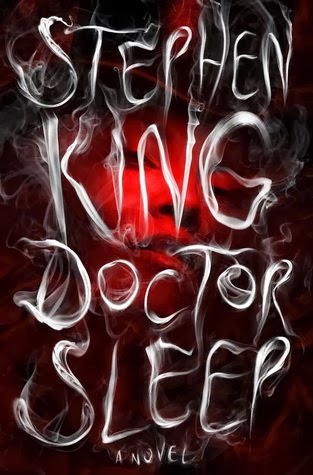
10. Doctor Sleep by Stephen King
My favorite movie poster of the year was a book cover.

I never said my top ten terrors would be films only. The return of REDRUM is the year's best horror cinema in novel form. This direct follow-up to The Shining is so strong, it makes me wish King would write sequels to more of his classics. This book even required a fright break, where the intensity reached a level that made me have to put it down to relieve, and prolong, the delicious terror. Pet Sematary and Under the Dome are two other King novels that required fright breaks.

9. Frankenstein's Army
Watch out, its a  Nazi.

This is one of two found footage film on my list. The joys of this film are all about the menagerie of mind-bending (and mind mixing) industrial/corpse/robots and the messy damage they inflict on humans. A subversive plus is that these are Nazi industrial/corpse/robots, which makes them doubly evil, and plants the film firmly in cult territory, the Nazisploitation subgenre.

8. Black Rock
Shoot his heads off!

I'll admit to having a fondness for another one of horror's most sordid subgenres, the rape/revenge film. What makes this battle of the sexes, three men hunting three women on a remote island after an attempted rape, so unique and fascinating is the woman's voice, and rage, that informs it. Directed, co-written and starring Katie Aselton in a raw and gritty performance, this female perspective on gender war is precisely what's missing from 2013's far less successful companion piece, I Spit On Your Grave 2.

7. V/H/S 2
This is religion in V/H/S 2.

This might sound like something Pervula would say, but I just love number twos! The first of two superior sequels on this list, and the second found footage film. An impressive slate of directors (Simon Barrett, Jason Eisener, Gareth Evans, Gregg Hale, Eduardo Sanchez, Timo Tjahjanto and Adam Wingard), a more solid and chilling wraparound, and a new focus on creative creatures instead of rapey fratboy cruelties made this anthology film a relentless thrill ride. A big bone... I mean bonus for featuring full frontal male nudity within the first minute of the movie. That's starting things out with a bang!

6. John Dies At The End
He's the good guy.

Few films successfully capture the narcotic effect, among them The Doors, Hardware, the films of Coffin Joe, and my #1 pick below, and I'll add this Don Coscarelli adaptation of the cult horror novel to that short list. This film is basically Phantasm on acid (countless shots and scenes are nearly identical), with the addition of comedy and a touching bromance at its core. It helps to eat a pot brownie beforehand.

5. The Hunger Games: Catching Fire
A body count is always better with Amanda Plummer.

Based on my favorite novel of the trilogy, and they nailed it. The best thing to happen to this franchise was the departure of the original's director Gary Ross, whose ugly, shaky-cam, over-cut attempt showed he had no real vision for the material. This entry has moments of striking dark fantasy (the lightening tree), convincing and suspenseful threats (the poison fog, the baboons), and the addition of Amanda Plummer as a nutty tribute seriously sweetens this body count pie.

4. Evil Dead
The scene that threw me out of my theater seat.

I have no problem with remakes. They are nothing but sequels in my mind. Remember in the 1980s, when horror sequels were accused of being nothing more than remakes, especially Friday the 13th Part II and Evil Dead 2? Remakes and sequels are just more of the same, and I'm fine with that. This return to the cabin in the woods had the most cringe-inducing ultra-violence I saw on the screen all year, delivered with wildly creative, Raimi-inspired camerawork. Best of all, there was no Ash or Bruce Campbell to cheese it up. One scene of mutilation literally flung me out of my theater seat with revulsion, a serious plus. The film's only glaring misstep, the one final post-credit shot.

3. The Cask of Amontillado from Tales of Poe
Brewster McCall and Alan Rowe Kelly create a new zombie king in The Cask.

This Edgar Allan Poe anthology film should finally see release in 2014. One of my favorite films of 2012 was the first segment, The Tell-Tale Heart, directed by Bart Mastronardi, which I caught at the Shriekfest Horror Film Festival. In 2013, I was lucky to get an advance screening of the second segment, The Cask of Amontillado, directed by Alan Rowe Kelly, and it has been rooted firmly in my nightmares ever since. This story plays like the best segment of Tales From the Crypt you've never seen, but there's something even more remarkable about it. The Cask features one of cinema's most iconic zombies, a ghoul that can shamble proudly beside Return of the Living Dead's Tarman, Zombie's Maggot Face, Creepshow's Grantham, and Tales From the Crypt's Grimsdyke. And this new zombie king is played by Randy Jones, one of the original Village People. Once you see this creeping ghoul coming for you and looking in your eyes, you will never forget him!

2. Carrie
Best girl fight of the year.

I reread the novel shortly before seeing this, and I could not have been more satisfied with the results. Some people took issue that Carrie was too precious a property to remake. Only this is not a remake; it's a new adaptation. Carrie was a hit novel before it was a movie, and it has become a modern classic, the new Dracula or Frankenstein. Every generation has the right to revisit and do a new take on these classics. Some will always see Bela Lugosi as Dracula, and others may prefer Christopher Lee or Gary Oldman in the role. I don't want to get into a comparison between Sissy and Chloe, because both offer honest and valid interpretations of Carrie. I had an intense emotional investment with all of the characters and their tragedy, especially with the new Sue Snell and Tommy Ross. Carrie 2013 also captures that rare small town, Stephen King atmosphere perfectly, boosted by a poignant score, my favorite of the year. I also appreciated that this modern take incorporated new technology while avoiding current teenager (and filmmaking) trends, an absolute rarity for studio based teenage films these days. Plus, the extended battle to the death between Carrie and Chris Hargensen was fierce!

It's also worth noting that this is the second film in my top ten directed by a woman. Kimberly Peirce is no Brian DePalma, nor does she need to be.

1. The Lords of Salem
Going to Hell in style.

The visionary work of a master horror filmmaker. An American nightmare dressed in European art horror aesthetics. A hallucinogenic head trip dripping with neon style and populated with some of the most gut-churning monsters I've ever seen. Watching this in a near empty theater, I became so disturbed, I feared I was going to Hell. Revisiting it on Halloween night at home, my blood still ran cold. I could go on for pages on why this was an artistic triumph for me (The performances! The art direction! The cinematography! The music! The abundance of roles for amazing, mature actresses!). This is just one of those films where I found every frame and every note to be perfection. It's also the best and most terrifying monster movie since The Mist.

Finally, I'll give mention to my most anticipated films of 2014. As my 2013 list proves, I can appreciate mainstream, studio horror as much as the independents. And while I'll definitely be in line early to see the new Godzilla, it's two micro-budget offerings that I'm most excited for.

First is the completed Tales of Poe, with its extremely clever updates of classic Poe stories. These adaptations avoid stuffy period trappings and modern annoyances, instead taking place in a timeless milieu. This anthology is also populated with a dream cast of scream queens, including Adrienne King (Friday the 13th), Amy Steel (Friday the 13th Part II), Lesleh Donaldson (Happy Birthday to Me), Caroline Williams (Texas Chainsaw Massacre 2), Debbie Rochon (Terror Firmer), Desiree Gould (Sleepaway Camp), Alan Rowe Kelly (The Blood Shed), and more. From what I've seen so far, the film is smart enough to use this talent pool to the fullest, giving them juicy roles to run with instead of just throwaway cameos.

My next pick is Grimewave: Cockface Killer 3. Seriously, director Jason Matherne is a mad genius, and possibly the illegitimate love child of John Waters and Lloyd Kaufman. Matherne and his company Terror Optic's last film, Goregasm, is a triumph of offensively hilarious, punk rock, exploitation horror that continually manages to make me scream out loud, scene after sordid scene. And this is coming from someone seasoned in shock filmmaking. Matherne is a criminally underrated talent of transgressive cinema, and I can't wait to be awed and appalled by Grimewave.